| Availability: | |
|---|---|
Description of Rectangular Pipe
Rectangular steel pipe is a type of structural hollow section (HSS) with a rectangular cross-section, widely used in construction, mechanical engineering, infrastructure, and industrial fabrication. Compared with circular pipes, rectangular steel tubes offer higher bending resistance in specific directions, better space utilization, and improved structural stability for load-bearing applications. ShineStar Steel Group Co., Ltd manufactures rectangular steel pipes in a wide range of sizes, wall thicknesses, and material grades to meet global engineering standards for structural and industrial use.
| Product name | Rectangular Pipe |
| Width(mm) | 10mm*20mm ~ 400mm*600mm |
| Wall Thickness(mm) | 0.5mm ~ 20mm |
| Length(mm) | 0.1mtr ~ 18mtr |
| Standard | ASTM A500, ASTM A53, EN 10210, EN 10219, JIS G 3466, BS 1387, BS 6323 |
| Material | 20#, A53B, A106B, API 5L ST37.0,ST35.8,St37.2,St35.4/8,St42,St45,St52,St52.4 STP G38,STP G42,STPT42,STB42,STS42,STPT49,STS49 |
| Surface | Black painting, varnish paint, anti-rust oil, hot galvanized, cold galvanized, 3PE |
| Certificates | API5L ISO 9001:2008 TUV SGS BV etc |
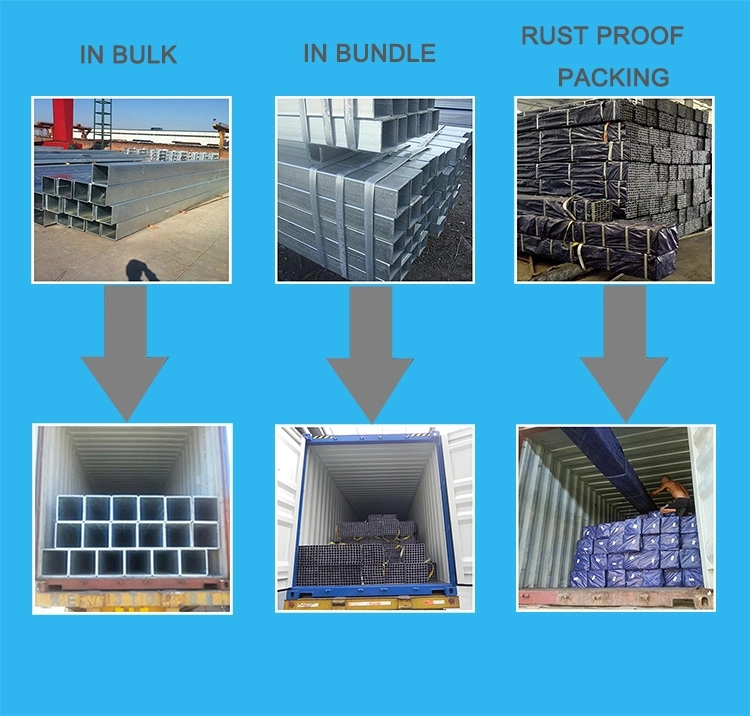
| Packaging | Loose package, packaged in bundles(3Ton Max), bundled pipes with two slings at both ends for easy loading and discharging, End with Plastic caps or as per requirement |
| Application | 1. Fluid pipe 2. Power Plant 3. Structure pipe 4. High and low pressure Boiler tube 5. Seamless pipe /tube for petroleum cracking 6. Conduit pipe 7. Scaffolding pipe, pharmaceutical and ship, building etc. |
Key Features of Rectangular Steel Pipe
Rectangular steel pipes are designed to combine structural strength with fabrication flexibility. Their geometry provides distinct mechanical and architectural advantages:
High strength-to-weight ratio for structural efficiency
Excellent bending resistance along the major axis
Flat surfaces for easy welding, cutting, and assembly
Space-saving profile compared with round pipes
Suitable for load-bearing and decorative applications
Consistent dimensional accuracy for precision engineering
Due to these properties, rectangular steel pipes are widely used in both structural frameworks and mechanical systems.
Specification of Rectangular Pipe
Rectangular Pipe sizes
Size (mm) | Wall Thickness (mm) | Size (mm) | Wall Thickness (mm) |
20*20 | 1.2 | 70*70 60*80 100*40 | 1.8 |
1.3 | 2 | ||
1.4-1.5 | 2.2 | ||
1.7 | 2.3 | ||
1.8 | 2.5-4.0 | ||
2 | 4.5-5.0 | ||
2.2 | 5.5-5.75 | ||
2.3 | 75*75 60*90 100*50 | 1.8 | |
2.5-2.75 | 2 | ||
25*25 20*30 | 1.2 | 2.2 | |
1.3 | 2.3 | ||
1.5 | 2.5-4.0 | ||
1.7 | 4.5-5.0 | ||
1.8 | 5.5-5.75 | ||
2 | 80*80 100*60 100*80 120*60 | 2 | |
2.3-2.3 | 2.2 | ||
2.5-3.0 | 2.3 | ||
30*30 30*40 25*40 20*40 | 1 | 2.5-4.0 | |
1.2 | 4.5-5.0 | ||
1.3 | 5.5-5.75 | ||
1.5 | 7.5-7.75 | ||
1.7 | 100*100 120*80 | 2 | |
1.8 | 2.2 | ||
2 | 2.3 | ||
2.2 | 2.5-5.0 | ||
2.3 | 5.5-5.75 | ||
2.5*2.75 | 7.5-7.75 | ||
3 | 120*120 140*80 150*100 160*80 | 2.5 | |
40*40 30*50 25*50 | 1.2 | 2.75 | |
1.3 | 3 | ||
1.4-1.5 | 3.25-5.0 | ||
1.7 | 5.5-7.0 | ||
1.8 | 7.5-7.75 | ||
2 | 140*140 150*150 200*100 | 3.5-4.0 | |
2.2-2.3 | 4.5-5.0 | ||
2.5-4.0 | 5.25-7.0 | ||
50*50 60*40 30*60 40*50 | 1.5 | 7.5-7.75 | |
1.7 | 160*160 180*180 | 3 | |
1.8 | 3.5 | ||
2 | 3.75 | ||
2.2 | 4.0-5.0 | ||
2.3 | 5.25-5.75 | ||
2.5*-4.0 | 7.5-7.75 | ||
4.25-5.0 | 60*60 40*80 75*75 50*70 50*80 | 2.3 | |
60*60 40*80 75*45 50*70 50*80 | 1.5 | 2.5-4.0 | |
1.7 | 4.25-5.0 | ||
1.8 | 5.5-5.75 | ||
2 | / | ||
2.2-2.3 | / |
Standard of Rectangular Pipe
Mechanical Sizes | Structural Sizes | ||
Largest Nominal Outside Dimension | Outside Tolerance at all Sides at Corners | Largest Nominal Outside Dimension | Outside Tolerance at all Sides at Corners |
3/16 to 5/8 | ± 0.004 | 2 1/2 and under | ± 0.020 |
over 5/8 to 1 1/8 | ± 0.005 | over 2 1/2 to 3 1/2 | ± 0.020 |
over 1 1/8 to 1 1/2 | ± 0.006 | over 3 1/2 to 5 1/2 | ± 0.030 |
over 1 1/2 to 2 | ± 0.008 | over 5 1/2 | ± 1% |
over 2 to 3 | ± 0.010 | ||
over 3 to 4 | ± 0.020 | ||
over 4 to 6 | ± 0.020 | ||
over 6 to 8 | ± 0.025 | ||
Squareness of Sides
Mechanical Sizes: Max: ± b = c x 0.006″
b = Tolerance for out-of-square
c = Largest external dimension across flats
Structural Sizes: Adjacent sides may deviate from 90 ° by ± 2 °
Maximum Twist of Rectangular Pipe (Mechanical & Structural Sizes)
Largest Dimension, inches | Max. Twist*, inches |
over 1/2 to 1 1/2 | 0.050 |
over 1 1/2 to 2 1/2 | 0.062 |
over 2 1/2 to 4 | 0.075 |
over 4 to 6 | 0.087 |
over 4 to 8 | 0.100 |
Largest Nominal O.D., Inches | Tolerance ± Inches |
2 1/2 and under | ± 0.010 |
over 2 1/2 to 4 | ± 0.015 |
over 4 to 8 | ± 0.025 |
Grades | Chemical | Physical | ||||||
C Max. % | Mn Max. % | P Max. % | S Max. % | Cu Max. % | Tensile strength, min. psi | Yield strength, min. psi | Elongation in 2 in. | |
B | 0.26 | / | 0.04 | 0.05 | 0.20 | 58,000 | 46,000 | 23 |
C | 0.23 | 1.35 | 0.04 | 0.05 | 0.20 | 62,000 | 50,000 | 21 |
Manufacturing Process
Rectangular steel pipes are typically produced using either hot-forming or cold-forming processes, depending on application requirements.
Hot-Formed Process
Steel strip or coil is heated and formed into a round tube, then shaped into a rectangular profile before welding. This process is suitable for heavy-duty structural applications requiring high strength and thick wall sections.
Cold-Formed Process
Cold-formed rectangular pipes are manufactured at room temperature from hot-rolled or cold-rolled steel coils. This method ensures tighter dimensional tolerances, smoother surface finish, and improved appearance quality.
Welding Methods
Depending on specification requirements, the pipes may be produced using:
High-frequency electric resistance welding (ERW)
Submerged arc welding (SAW) for heavy wall sections
Each production line is controlled to ensure stable weld integrity and consistent mechanical properties.
Painting & Coating of Rectangular Pipe
Bare, Black Painting, Lightly Oiled
Packing
Plastic plugs in both ends, Hexagonal bundles of max. 2,000kg with several steel strips, two tags on each bundle, wrapped in waterproof paper, PVC sleeve, and sackcloth with several steel strips

Q: We need rectangular steel tubes for a building framework. Which international standards can you supply?
A: We manufacture rectangular steel pipes in strict compliance with major international structural standards to meet diverse project requirements:
For Structural Applications: ASTM A500 (USA), EN 10219 (Europe), JIS G 3466 (Japan), and KS D 3568 (Korea) are the most commonly specified standards.
For Low-Pressure Fluid Transport: ASTM A53 and BS 1387 are applicable depending on the grade.
Material Grades: Common grades include Q195, Q235, and Q345, which are equivalent to S235/S355 (European) or A500 Grade A/B (American). For example, Q235 is typically equivalent to ASTM A500 Grade A.
Q: What size range and wall thickness options do you offer for rectangular pipes?
A: We offer a comprehensive range of sizes to meet various project needs:
Size Range: Typically from 20mm x 10mm up to 400mm x 300mm (or equivalent imperial sizes such as 1" x 0.5" up to 16" x 12").
Wall Thickness: Generally ranges from 1.0mm to 25mm, depending on the dimensions.
Lengths: Standard lengths are 5.8m, 6m, 11.8m, and 12m. We can also supply custom cut-to-length products.
Corner Radius: Standard corner radius (r) is typically 1.5 to 2.5 times the wall thickness, but custom radii are available upon request.
Q: What is the difference between rectangular and square steel pipes, and when should I use one over the other?
A: The main difference lies in the cross-sectional profile, which affects load-bearing characteristics:
Square Pipes (equal sides) are more efficient for uniform axial compression loads. They provide equal strength in all directions and are preferred for columns in building frames and balanced structural grids.
Rectangular Pipes (unequal sides) offer higher bending resistance and stiffness in the direction of the longer dimension, making them particularly suitable for beams, lintels, and horizontal structural members where loads are concentrated in one plane. The larger moment of inertia allows for lighter structures with the same load capacity.
Selection Guide:
Choose Square Pipes for columns, pillars, and structures with multi-directional loads.
Choose Rectangular Pipes for beams, floor joists, frames, and applications where strength is needed in one primary direction (e.g., supporting floors or roof loads).
Q: What surface treatments do you offer to prevent corrosion?
A: We provide multiple surface treatment options tailored to different environments:
Black Iron (Oiled): The most economical option, with a light oil coating for short-term protection during inland transport. Susceptible to rust in high-humidity or sea freight conditions.
Pre-Galvanized: The steel coil is galvanized before forming, offering good corrosion resistance at a moderate cost. This is commonly used for structural and fencing applications.
Hot-Dip Galvanized (HDG): Pipes are dipped in molten zinc after forming, providing the highest level of protection. HDG typically adds $0.08–0.15 per kilogram to the base cost but is essential for outdoor, marine, or highly corrosive environments.
Painted: Anti-corrosion paint (e.g., epoxy or polyurethane) is applied for specific color requirements or aesthetic purposes, saving on-site painting costs.
Q: How long does it take from order confirmation to shipment?
A: Typical lead times are as follows:
Production: 15–30 days after deposit confirmation for standard sizes and grades.
Expedited Production: As fast as 10 days may be possible for common grades (Q235/A500) in stock sizes.
Ocean Transit: 15–30 days depending on the destination port (e.g., 18 days to the US West Coast, 28–35 days to Europe).