| Availability: | |
|---|---|
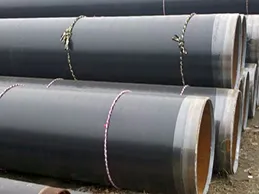
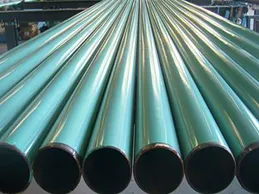
Epoxy Coated Steel Pipe is a carbon or alloy steel pipe that has been coated internally and/or externally with a thermosetting epoxy powder through an electrostatic spraying and high-temperature curing process. The coating forms a hard, continuous, non-porous protective layer that provides superior resistance to corrosion, chemicals, abrasion, and cathodic disbondment. It is widely used as an alternative to traditional anti-corrosion coatings such as 3LPE, 3LPP, and FBE, offering excellent adhesion and a smooth internal surface for improved flow characteristics.
| Advantage | Description |
|---|---|
| Superior Corrosion Resistance | Epoxy barrier prevents electrochemical corrosion from soil, water, acids, and salts; outperforms galvanized coatings in aggressive environments. |
| Abrasion Resistance | Hard, smooth epoxy surface withstands slurry erosion and particulate wear in mining and wastewater applications. |
| Chemical Resistance | Resistant to a broad range of chemicals including hydrocarbons, solvents, alkalis, and mild acids. |
| Low Friction Coefficient | Smooth internal surface reduces pumping energy and prevents scale buildup; improves flow efficiency by up to 15%. |
| High Adhesion & Cohesion | FBE coating achieves >15 MPa bond strength to steel substrate; resists cathodic disbondment. |
| Temperature Stability | Operating range: -30°C to +110°C (-22°F to +230°F) for standard FBE; high-temperature grades available up to +150°C. |
| Environmentally Friendly | Solvent-free FBE application emits zero VOCs; compliant with EPA and EU environmental regulations. |
| Cost Efficiency | Lower lifecycle cost vs. stainless steel or uncoated pipe; minimal maintenance and extended replacement intervals. |
| Industry | Typical Use Case | Coating Type |
|---|---|---|
| Oil & Gas | Crude oil, natural gas, and refined product pipelines | FBE (external) + internal liquid epoxy |
| Water & Wastewater | Potable water transmission, sewage force mains, stormwater drainage | Internal + external liquid epoxy |
| Chemical Processing | Acid/alkali transport, process piping in refineries | High-build liquid epoxy or phenolic epoxy |
| Fire Protection | Sprinkler systems, fire water mains | Red epoxy coating (UL/FM listed) |
| Marine & Offshore | Subsea pipelines, platform risers, ballast lines | 3LPE/FBE dual-layer systems |
| Mining & Slurry | Tailings transport, abrasive slurry pipelines | Abrasion-resistant epoxy (ARO) |
| Power Generation | Cooling water systems, ash slurry lines | Internal/external epoxy lining |
Standard:
DIN 30670: Polyethylene coatings of steel pipes adn fittings.
DIN 30678: Polythylene coatiing of steel pipes and fittings.
SY/T0413-2002: Technical standard of polythelene coating for buried steel pipeline.
Types of anti-corrosion coating
Pipe corrosion types are divided into external corrosion and internal corrosion.
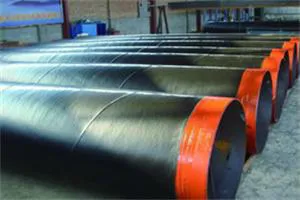
1. FBE anticorrosive epoxy powder
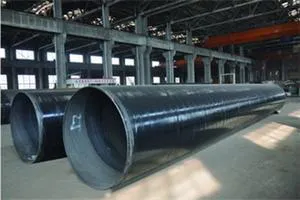
FBE epoxy powder preservative structure: electrostatic spraying epoxy powder coating on the pipe surface, a film. The coating has a coating operation is simple, clean, good impact resistance and flexural properties of the coating, temperature resistance advantages.
2. 2PE/3PE corrosion
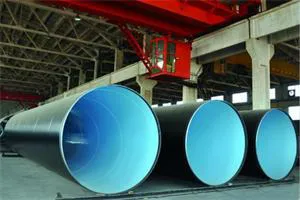
2PE/3PE corrosion structure: the steel surface electrostatic spraying epoxy powder and binder twine lateral lateral wound polyethylene coating, combined with three excellent performance, thereby significantly improving the overall quality of corrosion of the pipe. Resistant to chemical corrosion, cathodic stripping, resistance to mechanical damage performance.
3. Coal tar epoxy
Coal tar epoxy structure: epoxy resin + filler made of coal tar pitch anticorrosive coating on the steel surface coated glass fabric as reinforcement corrosion layer formation, commonly used in the pipe wall corrosion. thickness of 0.5 ~ 1.0mm.
Quality Testing & Inspection:
Coating Thickness Measurement: Magnetic induction or ultrasonic gauges
Holiday/Leak Detection (Spark Test): 5–15 kV voltage depending on coating thickness; no leakage points permitted
Hardness Testing: Per ASTM D2240 (Shore D)
DIN30670 for three-layer extruded and one- or multi-layered sintered polyethylene-based coatings
DIN30671 thermoset plastic coating For buried steel pipes
DIN30678 polypropylene coatings for steel pipes
CAN/CSA Z245.20/-Z245.21-02 external fusion bond epoxy coating for steel pipe/external polyethylene coating for pipe
SY/T4013-2002 for transport water, gas, oil,piling coating
SY/T0315-97 PE coating for buried steel pipe
One Layer / Double Layer FBE anti-corrosive coating powder (200um~800um)
3PP (Polypropylene) Coated Steel Pipe
DIN30678 standard technical specification for polypropylene coating for steel pipe and pipe fittings
3PP Coating Advantages:
The 3PP coated steel pipe refers to steel tubing with three layers of PP(Polypropylene) coating. It offers high electric strength, acid resistance, alkali resistance, salt-tolerance, electric insulation, long service life, thermal endurance and impact resistance. Because of advanced steel pipe coating technology, this type of plastic coated steel pipe features well-bonded coatings.
3PP Coating Applications:
The 3PP coating steel pipe is suitable for transferring special materials, such as high temperature materials, because it offers high electric strength, acid resistance, alkali resistance, salt-tolerance, electric insulation, long service life, thermal endurance and is impact resistant.

FBE Coated Steel Pipe
FBE coating pipe is Fusion Bonded Epoxy coating steel pipe. It is an externally applied heat resin for pipe. With a form of dry powder at thickness 300-600 microns on to the heated surface of pipe. Once the FBE coated on the pipe surface, the FBE film provides an extremely hard surface with great adhesion to the pipe surface. The FBE layer in a even form and have good resistance to the chemical reaction.

Polyurethane Insulation Coating Steel Pipe
The polyurethane direct buried heat preservation pipe is a direct buried preheating heat preservation pipe with good heat preservation performance, safety and reliability, and low engineering cost. The buried thermal insulation pipe not only has the advanced technology and practical performance that is difficult to compare with the traditional trench and overhead laying pipeline, but also has obvious social and economic benefits, and is also a powerful measure for heating and energy saving.
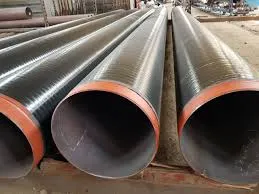
It is characterized by a multi-purpose use to prevent the spread of fire and good fire safety performance. Black jacket insulation pipe includes spiral steel pipe, straight seam steel pipe and seamless steel pipe. The outer layer is made of black polyethylene and is called a black jacket insulation tube.
Epoxy coated steel pipe is a carbon or alloy steel pipe that has been coated internally and/or externally with a thermosetting epoxy powder through an electrostatic spraying and high-temperature curing process. The coating forms a hard, continuous, non-porous protective layer that provides superior resistance to corrosion, chemicals, abrasion, and cathodic disbondment. It is widely used as an alternative to traditional anti-corrosion coatings such as 3LPE, 3LPP, and FBE, offering excellent adhesion and a smooth internal surface for improved flow characteristics.
FBE (Fusion Bonded Epoxy) is a specific type of epoxy coating where the dry epoxy powder is electrostatically applied to a preheated steel surface, then melts, flows, and chemically bonds (fuses) to form a continuous protective film. General "epoxy coating" may include solvent-based liquid epoxies (paint) applied by brushing or spraying. FBE is superior because it is solvent-free, eliminating shrinkage defects due to solvent evaporation, resulting in a denser, more durable film with significantly lower porosity. FBE also offers stronger adhesion to steel (≥10 MPa pull-off strength) and excellent cathodic disbondment resistance, making it the preferred choice for buried and subsea pipelines.
With proper design, coating specification, installation, and cathodic protection (CP) where applicable, epoxy coated steel pipes have demonstrated service lives exceeding 50 years in buried and underwater applications. FBE coatings provide a long-term bond that resists disbondment under CP, and the barrier properties of the coating prevent water and oxygen from reaching the steel surface, eliminating corrosion initiation. Laboratory accelerated aging tests (e.g., 30–50 year simulated life) validate this performance.
Proper surface preparation of the weld area (blasting or power tool cleaning to Sa2.5) is critical before field coating application.