
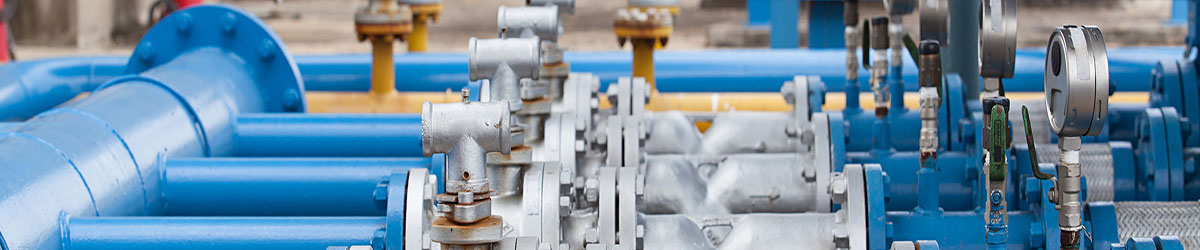
Advances in materials processing have brought unique opportunities to the stainless steel pipe manufacturing industry. Typical applications include exhaust pipes, fuel lines, fuel injectors, and other components.
In the production of stainless steel pipes, a flat steel strip is first formed, and then its shape is shaped into a cylindrical tube. Once formed, the joints of the stainless steel pipes must be welded together. This weld significantly affects the formability of the part. Therefore, selecting the appropriate welding technology is crucial to obtaining a weld shape that meets the stringent testing requirements of the manufacturing industry. Undoubtedly, gas tungsten inert gas (GTAW), high-frequency (HF) welding, and laser welding have all found their respective applications in the manufacture of stainless steel pipes.
First, High-Frequency Induction Welding of Stainless Steel Pipes
In both high-frequency contact welding and high-frequency induction welding, the devices providing the current and the devices providing the extrusion pressure are independent of each other. Furthermore, both methods can utilize a magnetic rod, a soft magnetic element placed inside the stainless steel pipe, which helps to converge the weld flow at the edge of the steel strip. In both cases, the steel strip is cut and cleaned, then rolled up and fed to the welding point. Additionally, a coolant is used to cool the induction coils used during the heating process. Finally, some coolant is used in the extrusion process. Here, a large force is applied to the extrusion pulleys to avoid porosity in the weld area; however, the use of greater extrusion force leads to increased burrs (or weld beads). Therefore, specially designed tools are used to remove burrs from both the inside and outside of the stainless steel tube. One of the main advantages of high-frequency welding is its ability to process steel tubes at high speeds. However, a typical situation in most solid-state forgings is that high-frequency welded joints are not easily and reliably tested using conventional non-destructive techniques (NDT). Weld cracks may appear in thin, flat areas at low-strength joints, which cannot be detected using conventional methods, thus potentially lacking reliability in some demanding automotive applications.
Second, Gas Tungsten Inert Gas Welding (GTAW) of Stainless Steel Tubes. Traditionally, steel tube manufacturers have chosen to complete the welding process using Gas Tungsten Inert Gas Welding (GTAW). GTAW generates a welding arc between two non-consumable tungsten electrodes. Simultaneously, an inert shielding gas is introduced from the torch to shield the electrodes, generate an ionized plasma flow, and protect the molten weld pool. This is an established and well-understood process that allows for repeatable high-quality welding. The advantages of this process lie in its repeatability, spatter-free welding process, and elimination of porosity. GTAW is considered an electrically conductive process; therefore, it is relatively slow.
Third, High-Frequency Arc Pulse for Stainless Steel Pipes. In recent years, GTAW welding power supplies, also known as high-speed switching, have enabled arc pulses exceeding 10,000 Hz. Steel pipe processing plants have benefited from this new technology, as the high-frequency arc pulse results in five times greater downward arc pressure compared to traditional GTAW. Representative improvements include increased burst strength, faster welding line speed, and reduced scrap. Steel pipe manufacturers quickly discovered that the weld profile obtained with this welding process needed to be smaller. Furthermore, the welding speed is still relatively slow.
Fourth, Laser Welding of Stainless Steel Pipes
In all steel pipe welding applications, the edges of the steel strip are melted, and solidification occurs when the pipe edges are pressed together using clamping supports. However, a unique property of laser welding is its high-energy beam density. The laser beam not only melts the surface of the material but also creates a keyhole, resulting in a very narrow weld bead. With power densities below 1 MW/cm², techniques like GTAW cannot generate sufficient energy to create a keyhole. Thus, keyholeless processes result in wide and shallow weld bead shapes. The high precision of laser welding leads to more efficient penetration, which reduces grain growth and results in better metallographic quality; on the other hand, GTAW’s higher heat input and slower cooling process lead to a rougher weld structure.
Generally, laser welding is considered faster than GTAW, with similar scrap rates, but the former yields better metallographic properties, resulting in higher burst strength and greater formability. Compared to high-frequency welding, laser processing does not cause oxidation of the material, leading to a lower scrap rate and higher formability.
Fifth, the Influence of Laser Spot Size in Stainless Steel Pipe Welding
In stainless steel pipe welding, the weld depth is determined by the thickness of the steel pipe. Therefore, the production goal is to improve formability and achieve higher speeds by reducing the weld width. When selecting the most suitable laser, one cannot only consider beam quality but also the accuracy of the rolling mill. Furthermore, the limitations imposed by reducing the laser spot size must be considered before the dimensional errors of the rolling mill take effect.
Many dimensional issues exist in steel pipe welding; however, the main factor affecting the weld is the joint in the weld box (more specifically, the weld coil). Once the steel strip has been formed and is ready for welding, the characteristics of the weld include: steel strip gap, severe/slight weld misalignment, and variations in the weld centerline. The gap determines how much material is used to form the weld pool. Excessive pressure will result in excess material at the top or inner diameter of the steel pipe. On the other hand, severe or slight weld misalignment will lead to a poor weld appearance.
Furthermore, after passing through the weld box, the steel pipe will undergo further finishing. This includes dimensional adjustments and shape (appearance) adjustments. On the other hand, additional work can remove some serious/minor weld defects, but may not eliminate them completely. Of course, we aim for zero defects. Generally, a rule of thumb is that weld defects should not exceed five percent of the material thickness. Exceeding this value will affect the strength of the welded product.
Finally, the presence of the weld centerline is crucial for the production of high-quality stainless steel pipes. With the automotive market’s increasing emphasis on formability, a direct consequence is the need for a smaller heat-affected zone (HAZ) and a smaller weld profile. This, in turn, has spurred the development of laser technology, specifically improving beam quality to reduce spot size. As spot size continues to shrink, we need to focus more on the accuracy of scanning the joint centerline. Generally, pipe manufacturers try to minimize this deviation, but in practice, achieving a deviation of 0.2 mm (0.008 inches) is very difficult.
This leads to the need for weld tracking systems. The two most common tracking technologies are mechanical scanning and laser scanning. Mechanical systems, on the one hand, use probes to contact the upstream of the weld pool; these probes are subject to dust, wear, and vibration. These systems have an accuracy of 0.25 mm (0.01 inches), which is insufficient for high-beam-quality laser welding.
On the other hand, laser weld seam tracking can achieve the required accuracy. Generally, a laser beam or spot is projected onto the weld surface, and the resulting image is fed back to a CMOS camera. This camera uses algorithms to determine the location of weld seams, misfits, and gaps.
While imaging speed is important, the laser weld seam tracker must have a sufficiently fast controller to accurately compute the weld seam position in order to provide the necessary closed-loop control to move the laser focus head directly over the seam. Therefore, weld seam tracking accuracy is crucial, as is response time.
Overall, weld seam tracking technology has been well-developed and allows steel pipe manufacturers to utilize higher-quality laser beams to produce stainless steel pipes with better formability. Thus, laser welding has found applications in reducing weld porosity, minimizing weld profile, while maintaining or increasing welding speed. Laser systems, such as diffused-cooled slab lasers, have improved beam quality, further enhancing formability by reducing weld width. This development has led to the need for stricter dimensional control and laser weld seam tracking in steel pipe plants.
Post time: Dec-09-2025