
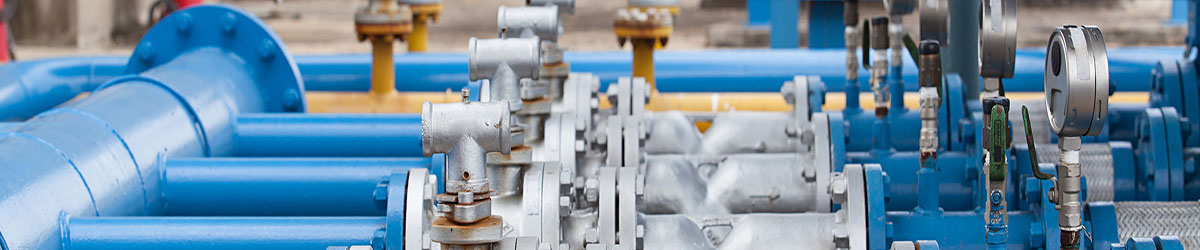
The performance and function of unpainted straight seam steel pipes in specific applications fully demonstrate their operational contribution and usage performance. After painting, with white lettering sprayed on, the straight seam steel pipes also look very neat and beautiful. Currently, pipe fittings, whether carbon steel straight seam steel pipes, carbon steel end caps, carbon steel tees, crosses, or other welded pipe fittings, are all unpainted, saving on processing steps. In reality, even with painting, it only looks good initially, serving to prevent rust on the surface. After the straight seam steel pipe is welded to the pipeline, it still needs to be painted again for anti-corrosion, followed by insulation.
What is unpainted straight seam steel pipe? It refers to straight seam steel pipes produced from carbon steel pipes, including 90-degree and 45-degree straight seam steel pipes, as well as welded pipe fittings such as bends and tees, which are not painted for anti-corrosion; the steel pipe retains its original color. This color comes in two varieties: red (as is the natural finish of straight seam steel pipes during production) and cyan, which is the original color. Initially, straight seam steel pipes produced without being painted with anti-rust paint were unsellable; they were considered mostly semi-finished products. This has almost become an industry standard. Otherwise, they are not considered complete straight seam steel pipes. During winter construction, the steel pipes are less prone to impact and breakage, increasing the flexibility of construction arrangements. They are also environmentally friendly, as they can be recycled without polluting the environment. Non-recyclable pipes, on the other hand, cause secondary pollution; they also present challenges in controlling the degree and uniformity of cross-linking, making processing complex and directly affecting the performance of the steel pipe.
Here are two ways to distinguish straight seam welded steel pipes:
First, by outer diameter: Straight seam welded steel pipes with an outer diameter between φ4.76 and φ12.70 mm are small-diameter pipes; those between φ13 and φ114 mm are small-diameter pipes; those between φ114 and φ406 mm are medium-diameter pipes; and those larger than φ406 mm are large-diameter pipes.
Second, by wall thickness: Welded steel pipes can be classified into five categories based on the ratio of wall thickness (t) to outer diameter (D):
① t/D less than 2% are extra-thin-walled pipes;
② t/D equal to 2-5% are thin-walled pipes;
③ t/D greater than 5-12% are ordinary-walled pipes;
④ t/D greater than 12-18% are thick-walled pipes;
⑤ t/D greater than 18% are extra-thin-walled pipes.
Thin-walled steel pipes, ordinary-walled steel pipes, and thick-walled steel pipes are not conceptually distinguished by their wall thickness. However, some standards correspond to three different wall thicknesses for the same outer diameter. These three wall thicknesses may be named thin-walled steel pipes, ordinary-walled welded steel pipes, and thickened straight seam steel pipes in the standard.
Because of the special properties of straight seam welded steel pipes, such as corrosion resistance, oxidation resistance, and antistatic properties, as well as their aesthetic appeal and durability, their use in machinery, components, and springs has gradually become a trend. With the continuous maturation and stability of the manufacturing process, straight seam welded steel pipes, a rapidly growing “sunrise” industry product in recent years, are gradually penetrating various fields such as practical small hardware and building decoration industries with their functions and multiple features. Moreover, as people become more familiar with them, their demand will become increasingly rapid, and their application areas will inevitably become increasingly broad. Furthermore, the fields of widely used welding rods and a large number of stainless steel components and connectors have also been largely occupied by straight seam welded steel pipes. In addition, with the full-scale development and rational utilization of high-tech products, the application scope of straight seam welded steel pipes is also expanding. Many industries have adopted straight seam welded steel pipes for the replacement of materials, with the most significant being the equipment transformation of the chemical industry and the chemical fiber industry.
Post time: Dec-12-2025