
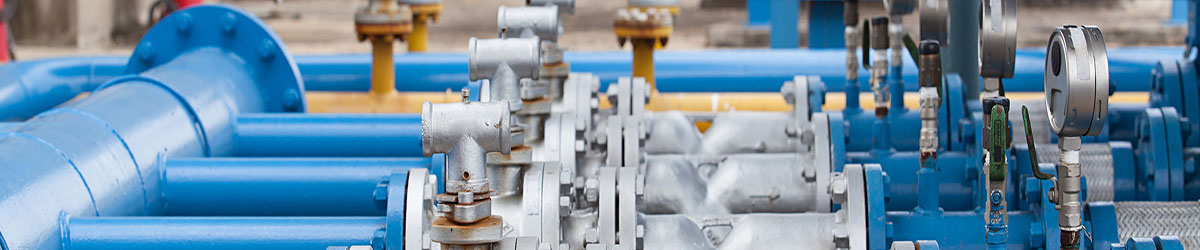
12CrMoG seamless steel pipe is an alloy steel pipe widely used in high-temperature and high-pressure environments. Its excellent performance makes it an indispensable material in industries such as power, petroleum, and chemicals. Its unique chemical composition and mechanical properties ensure exceptional stability and durability under extreme operating conditions.
First, the chemical composition and material properties of the 12CrMoG seamless steel pipe
12CrMoG is a low-alloy pearlitic heat-resistant steel with a chemical composition of approximately 0.8%-1.2% chromium and 0.4%-0.6% molybdenum, along with small amounts of carbon, silicon, and manganese. The addition of chromium significantly improves the steel’s oxidation and corrosion resistance, while molybdenum enhances its high-temperature strength and creep resistance. This combination enables 12CrMoG seamless steel pipe to maintain high mechanical properties even at high temperatures (typically no more than 580°C) and high pressures, making it particularly suitable for manufacturing critical components such as boiler superheaters, reheaters, and main steam lines.
Second, the production process and technical standards for 12CrMoG seamless steel pipes. The production process for 12CrMoG seamless steel pipes primarily involves hot rolling, cold drawing, and hot expansion. The hot rolling process forms the steel billet through high-temperature rolling and is suitable for large-diameter, thick-walled pipes. The cold drawing process improves dimensional accuracy and surface finish through cold working, making it suitable for small-diameter, high-precision pipes. The hot expansion process is used to produce large-diameter, thin-walled pipes of specialized specifications. During production, the heating temperature (typically 900°C-930°C) and the final rolling temperature (no less than 850°C) must be strictly controlled to prevent degradation of material properties. The domestic standard, GB/T 5310-2017, “Seamless Steel Pipes for High-Pressure Boilers,” primarily applies, sets clear requirements for the chemical composition, mechanical properties, processing performance, and non-destructive testing of 12CrMoG. For example, room-temperature tensile strength must be ≥410 MPa, yield strength ≥265 MPa, and elongation ≥24%. Furthermore, the steel pipes must undergo 100% ultrasonic testing or eddy current testing to ensure the absence of defects such as cracks and folds.
Third, Application Areas and Advantages of 12CrMoG Seamless Steel Pipes
In the power industry, 12CrMoG seamless steel pipes are the core material for supercritical and ultra-supercritical boilers.
In the petrochemical industry, this material is used for hydrogenation reactor piping, which is resistant to hydrogen and hydrogen sulfide corrosion. 12CrMoG pipes in one refining project remained intact after five years of service in sulfur-containing media.
Compared to ordinary carbon steel pipes, 12CrMoG’s advantages primarily lie in:
1. High-temperature stability: At 540°C, its allowable stress can still reach 75 MPa, 2.3 times that of 20# steel;
2. Fatigue resistance: The crack growth rate under cyclic loading is reduced by 40%.
3. Weldability: The preheating temperature (200°C-250°C) is lower than that of similar high-alloy steels, simplifying the post-weld heat treatment process.
Fourth, Market Status and Development Trends of 12CrMoG Seamless Steel Pipes
Currently, the annual production capacity of 12CrMoG seamless steel pipes in China is approximately 500,000 tons. As the installed capacity of new energy sources grows, demand for thermal power boiler upgrades is driving the continued expansion of the high-end pipe market. The “Action Plan for the Green and Low-Carbon Transformation of Power Equipment,” released by the National Development and Reform Commission in 2024, explicitly calls for raising the upper operating temperature limit of materials like 12CrMoG to 600°C, prompting companies to develop improved microalloyed models.
Future technological development will focus on:
- Composition optimization: Adding trace amounts of elements such as niobium and vanadium to refine grains;
- Process innovation: Using controlled rolling and controlled cooling (TMCP) to improve strength-toughness matching;
- Intelligent testing: Online nondestructive evaluation systems based on machine learning can monitor steel pipe quality in real time. Usage and Maintenance Recommendations for 12CrMoG Seamless Steel Pipe
In practical applications, the following should be noted:
1. Installation Specifications: Avoid forced fitting, and control the displacement of the cold-tightened joints to within ±10% of the design value;
2. Operational Monitoring: Conduct regular hardness testing (Brinell hardness should ideally be maintained between 140 and 190 HB), and promptly replace any softening.
3. Repair Technology: Local defects can be repaired using laser cladding, but the interpass temperature must not exceed 300°C.
A typical case study at a thermal power plant demonstrated that annual magnetic memory testing of 12CrMoG pipelines successfully identified stress concentration issues at welds and averted a potential pipe burst. This demonstrates the importance of scientific maintenance in extending pipe life.
Overall, 12CrMoG seamless steel pipe, with its balanced performance and cost-effectiveness, will remain the preferred material for medium- and high-temperature pressure piping over the next 20 years. With advancements in manufacturing technology and the accumulation of application data, its performance boundaries will be further expanded, providing more reliable assurance for the safe operation of energy equipment.
Post time: Aug-18-2025