
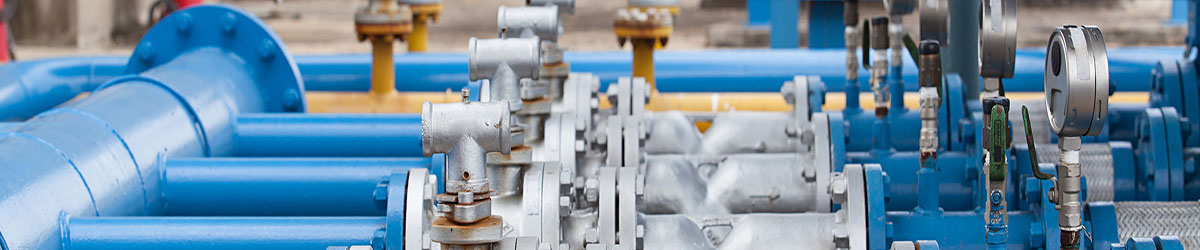
As a core material in the oil and gas transportation field, API 5LGrB seamless steel pipe‘s technical standards and application value directly affect the safety and economy of energy transportation. This type of steel pipe is manufactured according to the 5L standard set by the American Petroleum Institute (API). GrB represents its steel grade, belonging to medium-strength pipeline steel, and is widely used in onshore and subsea oil and gas transportation projects.
First, the material characteristics and production process of API 5LGrB seamless steel pipe.
API 5LGrB seamless steel pipe uses high-quality carbon steel or low-alloy steel billets, manufactured into seamless pipe bodies through hot rolling or cold drawing processes. According to Baidu Encyclopedia, its chemical composition must strictly meet requirements such as C≤0.28% and Mn≤1.20%, with a lower limit of yield strength of 241MPa and tensile strength between 413-517MPa. This composition design ensures strength while controlling the carbon equivalent (usually ≤0.43%) to ensure weldability. Mainstream manufacturers employ a complete process: continuous casting of round billets → ring furnace heating → piercing → continuous rolling → sizing → cooling → straightening → flaw detection. Hot rolling refines the grain size and improves the low-temperature toughness of the pipe, which is particularly important for pipelines in permafrost regions of northern China or deep-sea pipelines. It’s worth noting that compared to welded steel pipes, seamless structures eliminate the potential weakness of weld seams, resulting in superior reliability under high pressure (common operating pressure 4-8 MPa) and corrosive media environments. The supplier’s page indicating “passed the HIC hydrogen-induced cracking test” demonstrates that high-quality API 5LGrB pipes also possess resistance to hydrogen sulfide corrosion, crucial for the development of sulfur-containing oil and gas fields.
Second, Analysis of Industry Application Scenarios for API 5LGrB Seamless Steel Pipes.
1. Long-distance trunk pipelines: Diameters are typically between 219 and 610 mm, with wall thicknesses of 6-40 mm. For example, some sections of the West-East Gas Pipeline III use this specification of steel pipe. Its pressure-bearing capacity can meet the pressure requirements of pipelines up to 2500 kilometers long.
2. Gathering and Transmission Branch Line System: Smaller diameter (89-168mm) GrB pipes are commonly used in oilfield gathering and transmission networks.
3. City Gas Gate Station: As a transition section between high-pressure and medium-pressure urban gas networks, these stations must withstand pressure regulation impacts. Products with an impact energy ≥27J (-30℃) provided by the supplier are particularly suitable for this type of operation.
Special modified products can also adapt to polar environments. By adding trace amounts of Ni, Cr, and other elements, low-temperature impact toughness can be improved by more than 30%.
Third, Quality Control and Testing Standards for API 5LGrB Seamless Steel Pipes
1. Non-destructive Testing: Includes full-coverage ultrasonic testing (UT), as well as eddy current or magnetic flux leakage testing (EMI/MFL). A product description shows that its product complies with API SPEC 5L version 46 standard, with a UT rating of L2.
2. Physical and Chemical Testing: Tensile tests must meet the following requirements: elongation ≥22%, hardness HRC≤22. The encyclopedia states that the Charpy V-notch impact test is crucial for evaluating low-temperature performance; the average value of three samples at -20°C should not be lower than 20J.
3. Dimensional tolerances: Outer diameter tolerance ±0.75%-±1.25%, wall thickness tolerance controlled within +12.5%/-10%. The “positive wall thickness tolerance control” technology highlighted on the seller’s page ensures a safety margin for pressure bearing.
It is worth noting that the newly revised API SPEC 5L standard in 2025 added CTOD (Crack Tip Opening Displacement) testing requirements for GrB grade steel pipes, which is particularly important for subsea pipeline applications.
Fourth, Market Supply and Demand and Selection Recommendations for API 5LGrB Seamless Steel Pipes.
- Production Process Differences: Hot-rolled pipes are about 15% cheaper than cold-drawn steel pipes, but their dimensional accuracy is slightly inferior.
- Additional Properties: HIC-resistant pipes have a premium of about 8%, and low-temperature types have a premium of 12-18%.
- Delivery Condition: Normalized pipes are 5-10% more expensive than hot-rolled steel pipes.
Key points to consider when purchasing:
1. Whether the manufacturer has authorization to use the API monogram (e.g., the API 5L certificate displayed by the seller).
2. Whether a complete MTC material report is provided, including smelting analysis data.
3. For corrosive environments, the HIC/SSC test report needs to be confirmed.
4. Logistics: 12-meter fixed-length pipes have a 20% higher transportation cost than randomly length pipes.
Fifth, Technological Development Trends of API 5LGrB Seamless Steel Pipes.
1. Intelligent Manufacturing: Some manufacturers use digital twin technology to optimize rolling parameters, such as the “intelligent temperature control system” advertised by one manufacturer, which can reduce performance fluctuations by 40%.
2. Green Production: Hydrogen roasting technology reduces carbon emissions.
3. Composite Reinforcement: New API 5LGrB composite pipe platforms lined with polyethylene are gaining attention, offering a 3-fold improvement in wear resistance.
In the future, with the widespread adoption of high-strength steels such as X80, GrB grade pipes may concentrate on small- and medium-diameter pipes and applications in special environments. However, due to its excellent cost-effectiveness and mature manufacturing process, it will maintain a market share of over 30% in pipeline steel until 2030. End-users are advised to seek the optimal balance between cost and performance based on specific operating conditions, and, if necessary, request targeted solutions from suppliers.
Post time: Nov-11-2025