
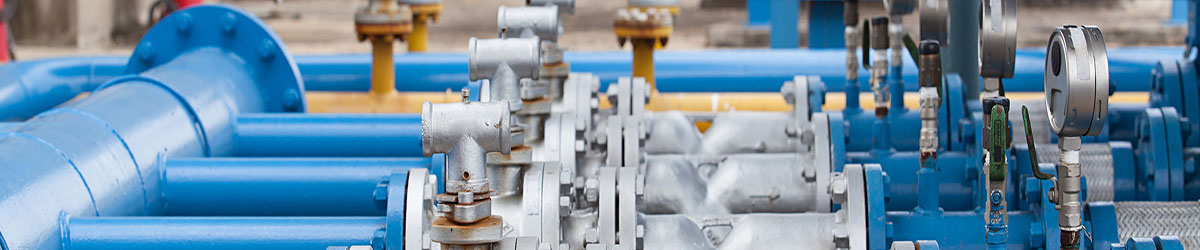
The installation methods for stainless steel pipe fittings are basically the same as those for ordinary carbon steel pipe fittings, but there are some special requirements in certain processes. These are as follows:
1. When hoisting stainless steel pipe fittings, they should not come into direct contact with other metals. Non-metallic materials such as wooden boards or rubber sheets should be used as padding.
2. For the arc initiation and termination of stainless steel pipe fittings, the arc initiation should use the back welding method, and the arc crater should be filled during arc termination. Arc initiation must be completed within the bevel; arc initiation and termination on the surface of the pipe or fitting base material are prohibited. If defects such as pores or cracks are found at the arc initiation and termination points, they should be cleaned promptly.
3. The arc initiation and termination points of multi-pass, multi-layer welds on stainless steel pipe fittings should be staggered.
4. For the connection of stainless steel pipes, fittings, elbows, tees, etc., and the connection between stainless steel pipes and fittings and non-stainless steel pipes and fittings, the butt joints should be filled with argon gas for protection before the root pass welding to ensure proper tungsten inert gas (TIG) welding. 5. When continuously welding stainless steel pipe fittings, the interpass temperature should not exceed 60℃.
6. During tack welding of stainless steel pipe fittings, the inner side of the weld should be protected with argon purging.
7. Ordinary abrasive wheels are not permitted for cutting stainless steel pipe fittings; specialized stainless steel pipe fitting abrasive wheels or plasma cutting should be used.
8. The weld at the joint of stainless steel pipe fittings should be pickled and passivated after welding.
9. The water pressure test for stainless steel pipelines has certain requirements for water temperature and quality. The water temperature should not be lower than 5 degrees Celsius; the chloride ion content in the water should not exceed 25 μmol/L.
Post time: Dec-01-2025