
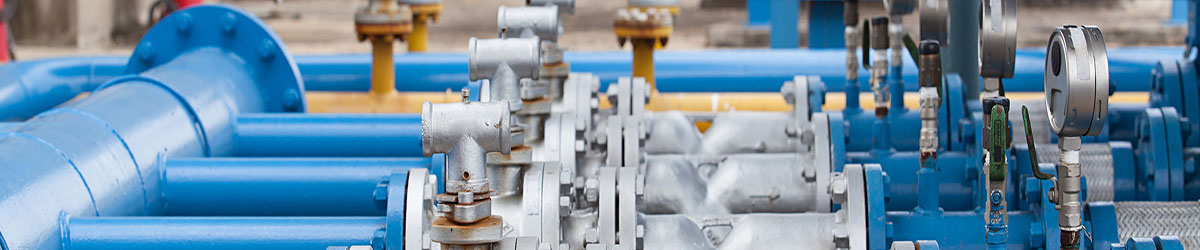
In a sense, straight seam steel pipe is a type of steel pipe welding process that contrasts with spiral steel pipe. Straight seam steel pipe welding is relatively simple and cost-effective, achieving high production efficiency, making it quite common in the market. As a widely used product, what are the practical advantages of straight seam steel pipe? Straight seam steel pipe is welded using a method parallel to the longitudinal direction of the steel pipe, and its application is also quite extensive. For the same diameter and length, the welding length of straight seam steel pipe is much shorter, while the welding length of spiral steel pipe can increase by more than 30%. Due to the process, the welding efficiency is relatively low, and the output is also quite low. However, with the same raw material, spiral welded pipe can generally produce products of various diameters. In contrast, straight seam steel pipe cannot achieve this welding effect.
The reason why straight seam steel pipe is widely used in the market is due to its inherent characteristics. Because the welding process is relatively inexpensive, and steel products can be manufactured using forging, extrusion, rolling, and drawing techniques with standardized specifications, wide application is possible. However, major steel producers have faced environmental crackdowns in their efforts to resolutely implement the air pollution control campaign. Analysts believe that environmental governance in the steel industry has entered the implementation phase, and in the long term, with the continuous advancement of various environmental governance measures, the straight seam steel pipe industry will be labeled as green and environmentally friendly.
During the steel pipe production process, some technical problems have arisen with the core drawing machine, resulting in uneven wall thickness, rolling jams, and deviations in inner straightness and outer diameter. Improving steel pipe production speed is a crucial issue. Laboratory experiments cannot solve production problems, and on-site workshop experiments are too costly and unsustainable; conclusions drawn from one or two experiments are unreliable. Therefore, numerical simulation methods are used to study the straight seam steel pipe rolling process. Currently, our industry focuses on rolling speed and the roll gap value—a key factor affecting 5-stand MPM continuous rolling products—as research targets. We employ a relatively equal load description method to establish a numerical simulation plan, studying the impact of key adjustable parameters (roll gap value and rolling speed) on continuous rolling force and metal accumulation. Using the MARC platform, we establish a finite element model of the straight seam welded pipe rolling process to study its influence on rolling force and wall thickness.
In my country, the petrochemical industry, water supply engineering, urban construction, and power engineering all have a demand for straight seam welded pipes. Straight seam welded pipe expansion is a pressure processing technology that uses hydraulic or mechanical methods to apply force from the inner wall of the steel pipe, causing it to expand radially outwards. Mechanical methods are simpler and more efficient than hydraulic methods, and the expansion process is used in several large-diameter straight seam welded pipe pipelines worldwide. A detailed introduction to the process is provided below.
Mechanical expansion of straight seam steel pipes utilizes segmented fan-shaped blocks at the end of an expander to expand radially, causing the pipe blank to undergo segmented plastic deformation along its length in a step-by-step manner. This process is divided into five stages:
1. Initial Rounding Stage: The fan-shaped blocks expand until all blocks contact the inner wall of the steel pipe. At this point, the radii of all points within the inner circle of the steel pipe within the step length are almost uniform, resulting in initial rounding of the steel pipe.
2. Nominal Inner Diameter Stage: The fan-shaped blocks reduce their speed from the initial position until they reach the required position, which is the desired inner circumference position of the finished pipe.
3. Springback Compensation Stage: The fan-shaped blocks further reduce their speed from the position in stage 2 until they reach the required position, which is the inner circumference position of the steel pipe before springback as required by the process design.
4. Pressure Holding and Stabilization Stage: The fan-shaped blocks remain stationary at the inner circumference position of the steel pipe before springback for a period of time. This is the pressure holding and stabilization stage required by the equipment and expansion process.
5. Unloading and Return Stage. The sector block rapidly retracts from the inner circumference of the steel pipe before the spring-loaded expansion until it reaches the initial expansion position. This is the minimum shrinkage diameter of the sector block required by the expansion process.
Post time: Dec-10-2025