
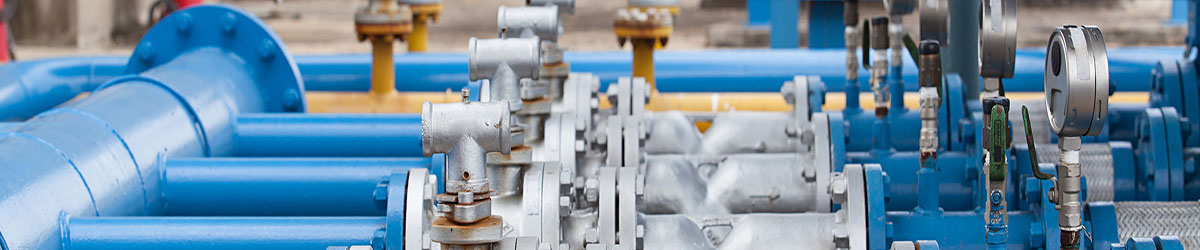
Galvanized steel pipes offer the dual advantages of corrosion resistance and long service life, along with their relatively low price. Therefore, their usage is increasing. However, some users neglect to pay attention when welding galvanized steel pipes, leading to unnecessary problems. So, what precautions should be taken when welding galvanized steel pipes?
1. Grinding is a prerequisite for welding galvanized steel pipes: The galvanized layer at the weld must be ground off. Otherwise, bubbles, sand holes, and false welds will occur. This will also make the weld brittle and reduce its rigidity.
2. Characteristics of Galvanized Steel Pipes
Galvanized steel is generally coated with a layer of zinc on low-carbon steel, typically 20µm thick. Zinc has a melting point of 419°C and a boiling point of around 908°C. During welding, the zinc melts into a liquid and floats on the surface of the weld pool or at the root of the weld. Zinc has a high solid solubility in iron, and the liquid zinc will penetrate deep into the weld metal along the grain boundaries. Zinc with a low melting point causes “liquid metal embrittlement.” Zinc and iron can also form brittle intermetallic compounds. These brittle phases reduce the plasticity of the weld metal and, under tensile stress, can cause cracks. Fillet welds, especially those in T-joints, are particularly susceptible to through-hole cracking. When welding galvanized steel, the zinc layer on the groove surface and edges oxidizes, melts, and evaporates under the arc heat, emitting white smoke and vapor, which can easily cause weld porosity. The ZnO formed by oxidation has a high melting point, approximately 1800°C or above. If welding parameters are too low, ZnO inclusions can occur. Furthermore, because Zn acts as a deoxidizer, low-melting-point oxide inclusions of FeO-MnO or FeO-MnO-SiO2 can form. Furthermore, the evaporation of zinc produces large amounts of white smoke, which can be irritating and harmful to the human body. Therefore, the galvanized layer at the weld must be removed by grinding.
3. Welding Process Control for Galvanized Steel Pipe: Pre-welding preparation for galvanized steel is the same as for standard mild steel. Important attention should be paid to carefully managing the groove dimensions and the surrounding galvanized layer. To ensure full penetration, the groove dimensions should be appropriate, generally 60-65°, and a certain gap should be left, typically 1.5-2.5mm. To reduce zinc penetration into the weld, the galvanized layer within the groove can be removed before welding. In practice, centralized beveling is used, leaving no blunt edges for centralized control. This two-layer welding process reduces the possibility of incomplete penetration. Welding rods should be selected based on the base material of the galvanized steel pipe. J422 is commonly used for mild steel due to ease of handling.
4. Welding Techniques for Galvanized Steel Pipe: When welding the first layer of a multi-layer weld, minimize the amount of liquid zinc remaining in the weld by melting the zinc layer and allowing it to vaporize. When welding fillet welds, try to melt the zinc layer in the first layer and allow it to vaporize, allowing it to escape the weld. This is done by first moving the tip of the electrode forward about 5 to 7 mm. Once the zinc layer is melted, return it to its original position and continue welding forward. For horizontal and vertical welding, using a short-slag electrode such as J427 will minimize undercutting. Using a back-and-forth electrode movement technique can achieve flawless welds.
Post time: Sep-03-2025