
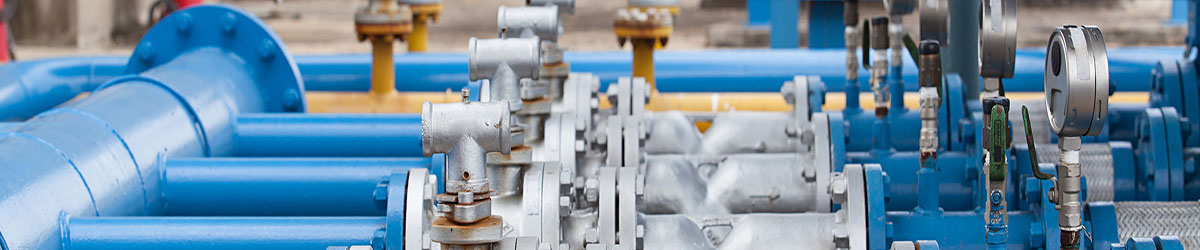
First, what is the current state of flange sleeves?
Flange sleeves are key transitional components in pipeline connection systems. Through precise fitting with seamless steel pipes and the connection function of the flange structure, they achieve pipeline sealing and load-bearing. Their assembly compatibility directly determines the sealing performance, stability, and service life of the pipeline connection. If the seamless steel pipe processing precision is insufficient, the assembly gap is unreasonable, or the material matching is poor, problems such as leakage, vibration fatigue, and corrosion failure can easily occur. Especially in complex working conditions such as petrochemicals, municipal water supply and drainage, and engineering machinery, higher requirements are placed on the processing precision and assembly coordination of flange sleeves and seamless steel pipes. Currently, in the processing and assembly of flange sleeves, there are common problems such as poor compatibility between seamless steel pipe selection and working conditions, uncontrolled processing dimensional tolerances, unreasonable assembly gaps, and insufficient connection strength.
Second, what aspects need attention regarding the selection and working condition adaptation of seamless steel pipes for flange sleeves?
2.1 Core principles for seamless steel pipe selection: The selection of seamless steel pipes for flange sleeves should follow three major principles: “working condition matching, performance synergy, and processing adaptation.”
(1) Mechanical performance matching: The seamless steel pipe must possess strength and toughness comparable to the flange sleeve to avoid local deformation caused by stress concentration after assembly.
(2) Corrosion resistance adaptation: Corrosion-resistant materials should be selected according to the characteristics of the medium to ensure the consistency of corrosion resistance of the overall connection system.
(3) Processing technology adaptation: The seamless steel pipe must possess good cutting, stamping, and welding performance to meet the requirements of subsequent precise processing and assembly connections.
2.2 Selection Scheme for Seamless Steel Pipes under Typical Working Conditions.
(1) Conventional Low-Pressure and Normal-Temperature Working Conditions: 20# or Q235B high-quality carbon steel seamless steel pipes are selected. These pipes have stable mechanical properties, good machinability, and low cost, meeting the assembly and load-bearing requirements of conventional flange sleeves.
(2) Medium- and High-Pressure Working Conditions: 35# or 45# medium-carbon seamless steel pipes or Q355 low-alloy seamless steel pipes are selected. Through heat treatment, their strength and hardness are improved, adapting to the sealing and load-bearing requirements under high pressure.
(3) Corrosive Working Conditions: 304 or 316L austenitic stainless steel seamless steel pipes are selected. These pipes contain ≥18% chromium and ≥8% nickel, possessing excellent resistance to acid and alkali corrosion and salt spray corrosion, preventing the failure of the seamless steel pipe and flange sleeve connection due to media erosion.
(4) High-Temperature Working Conditions: 12Cr1MoV alloy seamless steel pipes are selected. These pipes have excellent high-temperature resistance, good high-temperature strength, and oxidation resistance.
Third, the precision machining process of seamless steel pipes for flange sleeves
3.1 Core precision requirements for machining: To ensure the compatibility of the seamless steel pipe with the flange sleeve, the following precision indicators must be strictly controlled during the machining of the seamless steel pipe:
(1) Outer diameter tolerance: controlled within H8-H10 grade according to the assembly method. For example, the outer diameter tolerance is ≤ ±0.03mm for interference fit and ≤ ±0.05mm for transition fit;
(2) Roundness and cylindricity: errors ≤ 0.02mm/m to avoid uneven assembly gaps caused by elliptical cross-sections of the seamless steel pipe;
(3) End face perpendicularity: error ≤ 0.01mm/m to ensure a tight fit with the end face of the flange sleeve;
(4) Surface quality: outer surface roughness Ra ≤ 0.8μm, free from defects such as oxide scale, scratches, and dents to avoid affecting the fitting accuracy and sealing performance;
(5) Length accuracy: fixed length tolerance ≤ ±2mm to ensure accurate positioning of the flange sleeve during assembly.
3.2 A stepped processing technique of “rough machining – semi-finishing – finishing – surface treatment” is adopted to ensure the processing accuracy and surface quality of seamless steel pipes:
(1) Cutting: According to the flange assembly requirements, CNC circular saw, or laser cutting is used. The cutting speed is controlled at 0.8-1.5m/min. After cutting, the end face is flattened using an end milling machine to ensure the perpendicularity of the end face.
(2) External diameter finishing: A CNC lathe is selected, using carbide tools. The cutting speed is 80-120m/min, and the feed rate is 0.1-0.2mm/r. The cutting is completed in two stages to accurately control the outer diameter and roundness.
(3) Surface treatment: Carbon steel seamless pipes are pickled and phosphated to remove oxide scale and form a conversion film, improving the adhesion with the flange; stainless steel seamless pipes are passivated to enhance corrosion resistance. After surface treatment, they are dried (120℃, 30 minutes) to avoid residual moisture affecting assembly;
(4) Finishing inspection involves performing full-dimensional inspection on the machined seamless steel pipes to ensure that all accuracy indicators meet the requirements.
3.3 Machining Error Control Measures: To reduce machining errors and improve assembly compatibility, the following control measures are implemented:
(1) Equipment Accuracy Calibration: Regularly calibrate the CNC lathes, cutting machines, and other equipment to ensure that the spindle radial runout is ≤0.01mm and the guide rail parallelism is ≤0.02mm/m;
(2) Tool Management: Use high-precision carbide tools, and regularly sharpen and replace them to avoid tool wear leading to machining dimensional deviations;
(3) Machining Parameter Optimization: Determine the optimal cutting parameters through orthogonal experiments based on the different materials and wall thicknesses of the seamless steel pipes to reduce cutting thermal deformation.
(4) Environmental Control: Maintain a constant temperature (20±5℃) and humidity in the machining workshop to avoid thermal expansion and contraction of the seamless steel pipes due to temperature changes, which could affect machining accuracy.
Fourth, the assembly compatibility design of flange steel sleeves and seamless steel pipes:
Based on the working conditions and connection strength requirements, the following assembly fit methods are rationally selected:
(1) Interference fit: Suitable for medium and high-pressure, vibration conditions. The interference amount is controlled at 0.02-0.05mm. Assembly is achieved through hot or cold fitting processes. The clamping force generated by the interference amount ensures a firm connection and prevents loosening due to vibration.
(2) Transition fit: Suitable for normal pressure, non-violent vibration conditions. The fit clearance is controlled at -0.02~+0.03mm. This ensures convenient assembly and allows for reliable connection through subsequent welding or bolt tightening.
(3) Clearance fit: Suitable for low-pressure, disassembly, and maintenance conditions. The fit clearance is controlled at 0.05-0.1mm. Sealing is achieved through sealing components during assembly, facilitating later maintenance and replacement.
4.1 Assembly and Fitting Method Selection
4.2 Assembly Structure Adaptation Design
(1) Positioning Step Design: A positioning step with a height of 2-5mm is set on the inner wall of the flange steel sleeve to ensure accurate insertion depth of the seamless steel pipe and avoid over- or under-positioning during assembly.
(2) Guide Chamfer Design: A 30°-45° guide chamfer with a radius of 1-2mm is set at the flange steel sleeve inlet and the seamless steel pipe insertion end to facilitate assembly and avoid hard contact that could scratch the mating surfaces.
(3) Sealing Structure Design: A sealing groove is added according to the fitting method. For interference fit, an annular sealing groove is set on the end face of the flange steel sleeve, into which a metal spiral wound gasket is embedded. For clearance fit, an O-ring sealing groove is set on the inner wall of the flange steel sleeve, using oil-resistant and temperature-resistant fluororubber O-rings to ensure reliable sealing.
(4) Reinforcing Rib Design: 3-4 evenly distributed reinforcing ribs are set at the connection between the flange steel sleeve and the seamless steel pipe to improve connection strength and reduce vibration deformation.
4.3 Assembly Process Specifications
(1) Preparation before assembly: Clean the mating surfaces of the seamless steel pipe and the flange sleeve, removing oil, dust, and impurities. Wipe with anhydrous ethanol and then air dry. Check the mating surfaces for scratches, deformation, and other defects, and verify that the dimensional tolerances meet the fitting requirements.
(2) Precise assembly: For interference fits using a hot fitting process, place the flange sleeve in a heating furnace and heat it evenly. After the temperature reaches the set value, hold it at that temperature for 20-30 minutes, then quickly remove it and insert it into the seamless steel pipe. Allow it to cool naturally to room temperature to achieve a tight fit. For transition fits and clearance fits, use a press fitting process. Using a hydraulic press, the pressing speed should be controlled at 5-10 mm/s, and the pressure should be set according to the fit clearance and material characteristics (5-20 MPa) to avoid excessive pressure causing surface damage.
(3) Post-assembly fixing: After assembly, the connection is further strengthened by welding, bolting, or pin fixing according to the working conditions. Argon arc welding is used during welding, with a welding current of 80-120A to avoid changes in the fit clearance due to high welding temperature.
(4) Post-assembly inspection: Check the coaxiality and end-face fit of the flange steel sleeve and seamless steel pipe to ensure assembly qualification.
Fifth, Quality Control System for Processing and Assembly Adaptability
(1) Raw Material Inspection: Chemical composition analysis, mechanical property testing, and appearance quality inspection are conducted on seamless steel pipes to ensure they meet the selection requirements.
(2) Process Inspection: Sampling inspection is performed after each processing step. During the cutting process, end face perpendicularity and length tolerance are checked; during the outer diameter precision turning process, outer diameter, roundness, and surface roughness are checked; during the surface treatment process, the quality of the conversion film/passivation film is checked.
(3) Finished Product Inspection: After processing, the seamless steel pipes undergo full-size inspection. 5% of each batch is sampled for mechanical property retesting to ensure processing accuracy and performance meet standards. 5.1 Processing Quality Control
Key points of assembly process quality control:
(1) Pre-assembly verification: Verify the model and dimensional tolerances of the seamless steel pipe and flange sleeve to ensure accurate matching; check the cleanliness and integrity of the mating surfaces.
(2) Assembly parameter monitoring: For hot fitting, monitor the heating temperature and holding time in real time; for press fitting, monitor the press fitting speed and pressure to avoid parameter fluctuations affecting assembly quality.
(3) Post-assembly inspection: Use a laser coaxiality measuring instrument to check coaxiality, a feeler gauge to check the end face fit gap, and a pressure test (water pressure or air pressure) to check sealing performance;
(4) Traceability management: Establish processing and assembly quality files for each batch of products, recording raw material information, processing parameters, and test results to achieve quality traceability.
Conclusions:
1. Selecting seamless steel pipes based on operating conditions is fundamental to compatibility. Precise matching of different materials, such as carbon steel, low-alloy steel, and stainless steel, ensures consistency in the mechanical properties and corrosion resistance of the connection system.
2. Stepped processing technology and error control measures can control key precision indicators such as the outer diameter tolerance, roundness, and end face perpendicularity of the seamless steel pipe within the design range, providing a guarantee for assembly compatibility.
3. Reasonable selection of fitting methods and assembly structure design, combined with standardized assembly processes, can achieve precise coordination between the flange sleeve and the seamless steel pipe, improving connection strength and sealing performance.
4. A comprehensive quality control system ensures the stability of processing and assembly quality. Laboratory and actual operating condition verification show that the solution possesses excellent reliability and economy.
Post time: Jan-22-2026